
Top videos

Seizure
Seizure samer kareem 2,114 Views • 2 years ago

A seizure occurs when there’s abnormal electrical activity in the brain. Seizures may go virtually unnoticed. Or, in severe cases, they may produce a change or loss of consciousness and involuntary muscle spasms called convulsions. Seizures usually come on suddenly and vary in duration and severity. A seizure may be a one-time event, or you may have seizures repeatedly. Recurrent seizures are called epilepsy, or a seizure disorder. Less than one in 10 people who has a seizure develops epilepsy. Experts classify seizures into two general categories and many subtypes based on the pattern of the attack. Generalized seizures involve both sides of the brain from the start of the attack. Common subtypes include tonic-clonic (grand mal) and absence seizures (petit mal). Febrile and infantile spasms are two types of generalized seizures that occur almost exclusively in young children. Partial (or focal) seizures are the second major seizure type. These begin in a specific area of the brain and may be contained there. Or they may spread to the entire brain. With simple partial seizures, the person remains conscious. Complex partial seizures involve impaired consciousness. What Causes Seizures? Often the cause of a seizure is unknown. Many conditions can provoke seizures, including: Stroke Brain tumors Head injuries Electrolyte imbalance Very low blood sugar Repetitive sounds or flashing lights, such as in video games Medications, such as antipsychotics and some asthma drugs Withdrawal from medications, such as Xanax, narcotics, or alcohol Use of drugs such as cocaine and heroin Cancer Brain infections, such as meningitis

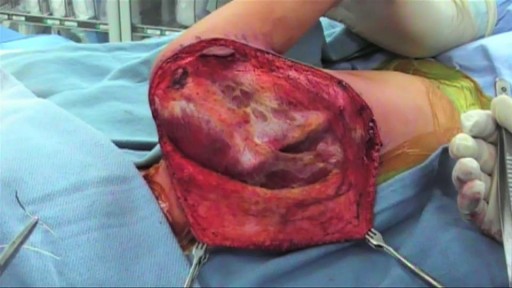
Hand Transplant Surgical Procedure
Hand Transplant Surgical Procedure samer kareem 2,114 Views • 2 years ago

Not every person who is missing a hand or upper limb might be eligible to receive a transplant. Many people are able to live full lives and accomplish everything they desire with the aid of a prosthetic device and sometimes without the aid of anything. However, some people find prosthetics difficult to use and the lack of sensory “feedback” from their prosthesis can significantly limit their function. These persons may consider reconstructive transplantation. We find that those patients who have either bilateral (both hands) amputations or those who have had their dominant hand amputated are likely to receive the most benefit from the procedure. However, we will provide information to any interested person regardless of the nature of their amputation.

Large Nasal Polyps Removal Surgery
Large Nasal Polyps Removal Surgery samer kareem 2,114 Views • 2 years ago

Causes are chronic inflammation due to infection, allergies, drug sensitivity, or immune disorders. Symptoms may include a runny nose, stuffiness, or post-nasal drip. In some cases, there may be no symptoms. The condition can be treated with corticosteroids, other medications, or surgery.

Pain Management During Birth
Pain Management During Birth Alicia Berger 2,114 Views • 2 years ago

Pain Management During Birth

Synthol shoulder leaking
Synthol shoulder leaking hooda 2,112 Views • 2 years ago

A bodybuilder gets his shoulder leaking because of synthol use on the stage while posing back double biceps

What is Prostate Cancer ?
What is Prostate Cancer ? samer kareem 2,112 Views • 2 years ago

Prostate cancer is the most common cancer among men (after skin cancer), but it can often be treated successfully. If you have prostate cancer or are close to someone who does, knowing what to expect can help you cope. Here you can find out all about prostate cancer, including risk factors, symptoms, how it is found, and how it is treated.

human papillomavirus infection
human papillomavirus infection samer kareem 2,112 Views • 2 years ago

HPV is a different virus than HIV and HSV (herpes). HPV is so common that nearly all sexually active men and women get it at some point in their lives. There are many different types of HPV. Some types can cause health problems including genital warts and cancers.

Ganglion Cyst
Ganglion Cyst samer kareem 2,111 Views • 2 years ago

Ganglion cysts are noncancerous lumps that most commonly develop along the tendons or joints of your wrists or hands. They also may occur in the ankles and feet. Ganglion cysts are typically round or oval and are filled with a jellylike fluid. Small ganglion cysts can be pea-sized, while larger ones can be around an inch (2.5 centimeters) in diameter. Ganglion cysts can be painful if they press on a nearby nerve. Their location can sometimes interfere with joint movement. If your ganglion cyst is causing you problems, your doctor may suggest trying to drain the cyst with a needle. Removing the cyst surgically also is an option. But if you have no symptoms, no treatment is necessary. In many cases, the cysts go away on their own.

Brachial Plexus Anatomy Explained - Everything You Need To Know - Dr. Nabil Ebraheim
Brachial Plexus Anatomy Explained - Everything You Need To Know - Dr. Nabil Ebraheim samer kareem 2,111 Views • 2 years ago

The brachial plexus is the network of nerves that sends signals from your spine to your shoulder, arm and hand. A brachial plexus injury occurs when these nerves are stretched, compressed, or in the most serious cases, ripped apart or torn away from the spinal cord. Minor brachial plexus injuries, known as stingers or burners, are common in contact sports, such as football. Babies sometimes sustain brachial plexus injuries during birth. Other conditions, such as inflammation or tumors, may affect the brachial plexus. The most severe brachial plexus injuries usually result from auto or motorcycle accidents. Severe brachial plexus injuries can leave your arm paralyzed, with a loss of function and sensation. Surgical procedures such as nerve grafts, nerve transfers or muscle transfers can help restore function.

Blood Transfusion and Intravenous Infusion
Blood Transfusion and Intravenous Infusion samer kareem 2,109 Views • 2 years ago

TAPP
TAPP wang bzh 2,109 Views • 2 years ago

TAPP

Multiple sclerosis (MS)
Multiple sclerosis (MS) samer kareem 2,106 Views • 2 years ago

Multiple sclerosis (MS) affects the brain and spinal cord. Early MS symptoms include weakness, tingling, numbness, and blurred vision. Other signs are muscle stiffness, thinking problems, and urinary problems. Treatment can relieve MS symptoms and delay disease progression.

Missing your Period!?
Missing your Period!? samer kareem 2,106 Views • 2 years ago

Most women have between 11 and 13 menstrual periods each year. You may be different: You may have more or fewer. Missed or irregular periods must be looked at in terms of what is normal for you. Menstrual periods are often irregular during the first few years after menstruation starts. It may take several years for the hormones that control menstruation to reach a balance. Menstrual periods also may be very irregular at the other end of the menstrual years. Many women realize that they are approaching perimenopause and menopause when their otherwise regular periods become irregular. Menopause occurs when it has been 12 months since you had a menstrual period. Pregnancy is the most common cause of a missed period. If you might be pregnant, treat yourself as if you are pregnant until you know for sure. Use a home pregnancy test as the first step to finding out whether you are pregnant.

Upper Eyelid Reconstruction
Upper Eyelid Reconstruction samer kareem 2,105 Views • 2 years ago

Live Surgery: Upper Eyelid Reconstruction - Tenzel Flap

Uterine Fibroids
Uterine Fibroids samer kareem 2,104 Views • 2 years ago

Uterine fibroids are noncancerous growths of the uterus that often appear during childbearing years. Also called leiomyomas (lie-o-my-O-muhs) or myomas, uterine fibroids aren't associated with an increased risk of uterine cancer and almost never develop into cancer. Fibroids range in size from seedlings, undetectable by the human eye, to bulky masses that can distort and enlarge the uterus. You can have a single fibroid or multiple ones. In extreme cases, multiple fibroids can expand the uterus so much that it reaches the rib cage. Many women have uterine fibroids sometime during their lives. But most women don't know they have uterine fibroids because they often cause no symptoms. Your doctor may discover fibroids incidentally during a pelvic exam or prenatal ultrasound.

Gitelman Syndrome
Gitelman Syndrome samer kareem 2,104 Views • 2 years ago

Gitelman syndrome is a kidney disorder that causes an imbalance of charged atoms (ions) in the body, including ions of potassium, magnesium, and calcium. The signs and symptoms of Gitelman syndrome usually appear in late childhood or adolescence. Common features of this condition include painful muscle spasms (tetany), muscle weakness or cramping, dizziness, and salt craving. Also common is a tingling or prickly sensation in the skin (paresthesias), most often affecting the face. Some individuals with Gitelman syndrome experience excessive tiredness (fatigue), low blood pressure, and a painful joint condition called chondrocalcinosis. Studies suggest that Gitelman syndrome may also increase the risk of a potentially dangerous abnormal heart rhythm called ventricular arrhythmia. The signs and symptoms of Gitelman syndrome vary widely, even among affected members of the same family. Most people with this condition have relatively mild symptoms, although affected individuals with severe muscle cramping, paralysis, and slow growth have been reported.

Vaginal Childbirth Animation
Vaginal Childbirth Animation Mohamed Ibrahim 2,103 Views • 2 years ago

An animation showing vaginal childbirth (delivery)

pleurisy
pleurisy samer kareem 2,102 Views • 2 years ago

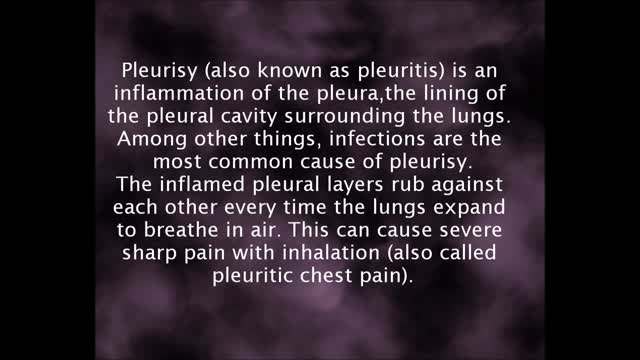
Pleurisy is a condition in which the pleura — a membrane consisting of a layer of tissue that lines the inner side of the chest cavity and a layer of tissue that surrounds the lungs — becomes inflamed. Also called pleuritis, pleurisy causes sharp chest pain (pleuritic pain) that worsens during breathing. A variety of underlying conditions can cause pleurisy. Treatment of pleurisy involves pain control and treating the underlying condition.

Reanimate a newborn after delivery
Reanimate a newborn after delivery samer kareem 2,101 Views • 2 years ago

Doctors trying to reanimate a newborn after delivery.Watch till the end to see what happened..
How to Cure Goiters
How to Cure Goiters samer kareem 2,098 Views • 2 years ago

Goiter treatment depends on the size of the goiter, your signs and symptoms, and the underlying cause. Your doctor may recommend: Observation. If your goiter is small and doesn't cause problems, and your thyroid is functioning normally, your doctor may suggest a wait-and-see approach. Medications. If you have hypothyroidism, thyroid hormone replacement with levothyroxine (Levoxyl, Synthroid, Tirosint) will resolve the symptoms of hypothyroidism as well as slow the release of thyroid-stimulating hormone from your pituitary gland, often decreasing the size of the goiter. For inflammation of your thyroid gland, your doctor may suggest aspirin or a corticosteroid medication to treat the inflammation. For goiters associated with hyperthyroidism, you may need medications to normalize hormone levels. Surgery. Removing all or part of your thyroid gland (total or partial thyroidectomy) is an option if you have a large goiter that is uncomfortable or causes difficulty breathing or swallowing, or in some cases, if you have a nodular goiter causing hyperthyroidism.

Showing 283 out of 284