Top videos

Emery King
12,911 Views ยท 2 years ago

This minimally invasive procedure employs two small cuts rather than a long incision before fusing two vertebra together. The result is less pain, as well as quicker recovery. ~ Detroit Medical Center

Robert Pace
1,515 Views ยท 2 years ago

Visit http://www.vipmedicalgroup.com or call us at (877) 739-5306 for more information on minimally invasive pain management treatments. At VIP Centers, we offer pain management services such as treatment for neck pain, back pain, shoulder pain, hip pain, knee pain, or any other joint pain related injury. Our highly skilled team of doctors are Harvard trained and Board Certified. They have a wealth of experience in pain medicine, sports medicine, bone and joint inflammation. The procedures we offer do not require a hospital stay, general anesthesia, or painful surgery. This means you can return to your normal activities immediately after your treatment.

Emery King
16,855 Views ยท 2 years ago

A new procedure, laparoscopic hysterectomy, means there's no reason for a woman to undergo an invasive abdominal hysterectomy unless she has a severe medical problem. ~ Detroit Medical Center

samer kareem
5,348 Views ยท 2 years ago

Flexible bronchoscopy is a procedure that allows a clinician to examine the breathing passages (airways) of the lungs (figure 1). Flexible bronchoscopy can be either a diagnostic procedure (to find out more about a possible problem) or a therapeutic procedure (to try to treat an existing problem or condition).

Surgeon
39,383 Views ยท 2 years ago

A video showing the full steps for a successful epidural placement, puncture and application of anaesthesia

Scott
9,900 Views ยท 2 years ago

Laser Hair Removal for Dark Skin with YAG Laser

Mohamed Ibrahim
14,249 Views ยท 2 years ago

Endoscopic Removal of Coin from Esophagus

Scott
76,684 Views ยท 2 years ago

Parasitic Worm removed from Man's EYE

Scott
47,252 Views ยท 2 years ago

Draining a Hand Abscess

samer kareem
4,579 Views ยท 2 years ago

Is your vertigo or dizziness BPPV or autoimmune?

Scott
32 Views ยท 2 years ago

SUBSCRIBE: https://www.youtube.com/c/TVNe....phrologist?sub_confi

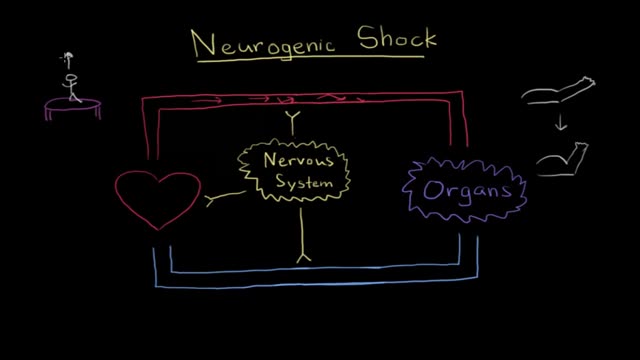
An animation of blood flow inside the Hemodialysis circuit.

About Dr. Rifai:
Dr. Ahmad Oussama Rifai is certified by the American Board of Internal Medicine (ABIM) in the specialty of Internal Medicine and the sub-specialty of Nephrology.

MEET DR. RIFAI
https://www.thevirtualnephrologist.com/rifai/

Follow The Virtual Nephrologist on SOCIAL MEDIA:
-Facebook: https://www.facebook.com/thevirtualnephrologist
-Instagram: https://www.instagram.com/thevirtualnephrologist/
-Twitter: https://twitter.com/VNephrologist

Schedule a virtual consult:
https://www.thevirtualnephrolo....gist.com/schedule-a-

Best wishes for great health | The Virtual Nephrologist

Scott
30 Views ยท 2 years ago

Home hemodialysis gives you the flexibility to fit treatment into your lifestyle and may help you feel better with fewer medications and dietary restrictions. Watch this video to find out about how home hemodialysis could be right for you, and visit our website to learn more: www.FreseniusKidneyCare.com/HHD. #HomeDialysis #DialysisTreatment #KidneyDialysis

Subscribe to Our YouTube Channel
Subscribe Here: https://www.youtube.com/user/FMSMarketing

Find Fresenius Kidney Care Online at:
Website: https://www.freseniuskidneycare.com/

Facebook:@FreseniusKidneyCare
https://www.facebook.com/FreseniusKidneyCare/

Pinterest: Fresenius Kidney Care
https://www.pinterest.com/FreseniusKidneyCarePins/

samer kareem
1,348 Views ยท 2 years ago

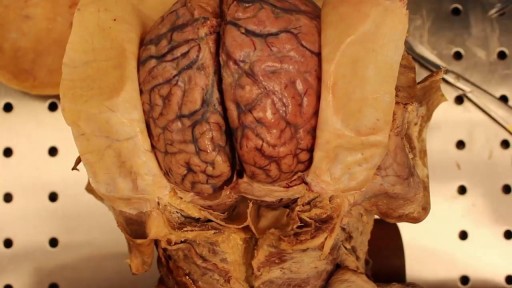
A good starting point for any scientist in any field is to recognize that there is much we do not know. We do not know, for example, why there is more matter than antimatter in the universe. We do not know very well how the evolution of the dinosaurs filtered out. And, perhaps most surprising of all is that we do not know very well how many organs the human body has or what all its functions are.

Scott
17 Views ยท 2 years ago

Common causes of the knee pain
Knee pain is very common and in this video we will present the most common problems that can cause pain in the knee. (Patella) itself, which is in front of the knee, or from the tendons that are attached to the kneecap (patellar tendon and quadricep tendon). One of the most common problems is patellar chondromalacia which is chronic pain due to the softening of the cartilage beneath the kneecap. The cartilage of the kneecap will have some erosions, defects, or holes from mild to complete inside the joint (exactly in the back of the kneecap).
โ€ข Pain in the front of the knee
โ€ข Occurs more in young people
โ€ข Becomes worse from climbing up stairs and going downstairs
Treatment is usually nonsteroidal anti-inflammatory medication, physical therapy, and surgery is very rare. Also in front of the kneecap, the patient may get pain due to prepatellar bursitis.
When there is prepatellar bursitis, the patient will see that the swelling, the inflammation, and the pain is located over the front of the kneecap. The bursa becomes inflamed and fills with fluid at the top of the knee, causing pain, swelling, tenderness and a lump in that area on top of the kneecap. If the pain is in front of the knee but below or above the patella, this may indicate that the patient has tendonitis. Patellar tendonitis is an overuse condition that often occurs in athletes who perform repetitive jumping activities. Patellar tendonitis is a knee pain that is associated with focal patellar tendon tenderness and it is usually activity related. It is located below the kneecap and is called "jumper's knee". Patellar tendonitis affects approximately 20% of jumping athletes. There will be tenderness to palpation at the distal pole of the patella in extension and not in flexion. Quadriceps inflexibility, atrophy and hamstring tightness are predisposing factors for this condition. Treatment is rest, anti-inflammatory medication, stretching and strengthening of the hamstrings and quadriceps. Use an eccentric exercise program. The early stages of patellar tendonitis will respond well to nonoperative treatment. Another important cause of knee pain is a meniscal tear. The meniscus is the cushion that protects the cartilage in the knee. Injury will cause pain on the medial or the lateral side of the knee exactly at the level of the joint. The patient will complain of a history of locking, instability and swelling of the knee. McMurray test will be positive. A painful pop or click is obtained as the knee is brought from flexion to extension with either internal or external rotation of the knee. Arthritis of the knee Knee arthritis is very common. The cartilage cells die with age and its repair response decreases in the joint collapses with increased breakdown of the framework of the cartilage. The patient will have progressive blurring away of the cartilage of the joint with decreased joint space as seen on x-rays. Another source of pain is the Baker's cyst. The cyst is in the back of the knee between the semimembranosus yes and the medial gastrocnemius muscles. Another important source of knee pain is a ligament injury. Here is a normal knee without a ligament injury. Here you can see from the front, you can see the lateral and medial collateral ligament. You can see the ACL and PCL from the side view. These ligaments are usually injured as a result of a sports activity. Here is an example of a sports knee injury. Here is an example of the medial collateral ligament injury. This is the most commonly injury knee ligament injury to this ligament is on the inner part of the knee. Here is an example of an injury of the anterior cruciate ligament. It involves a valgus stress to the knee. Lachman test is usually positive, and MRI is diagnostic. Another important cause of knee pain is iliotibial band syndrome of the knee. Inflammation of the thickening of the iliotibial band results from excessive friction as the iliotibial band slides over the lateral femoral condyle. The iliotibial band is a thick band of fascia that extends along the lateral thigh from the iliac crest to the knee. And as the knee moves, the IT band was repeatedly shifted forwards and backwards across the lateral femoral condyle. The patient will complain of swelling, tenderness, and crepitus over the lateral femoral condyle. The condition occurs in the ITB S occurs in runners, cyclist and athletes that require repeated knee flexion and extension. The pain may be reproduced by doing a single-leg squat. The Ober's test is used to at assess tightness of the iliotibial band. MRI may show edema in the area of the ITB. Treatment is usually nonoperative with rest and ice, physical therapy, with stretching, proprioception, and improvement in neuromuscular coordination. Training modification and injections may be helpful. Surgery is a last resort. Surgical excision of the scarred inflamed part of the iliotibial band.

Scott
14,368 Views ยท 2 years ago

The majority of fetuses are in a breech presentation early in pregnancy. By week 38th week of gestation, however, the fetus normally turns to a cephalic presentation. Although the fetal head is the widest single diameter, the fetusโ€™s buttocks [ breech], plus the lower extremities, actually takes up more space. The fundus, being the largest part of the uterus, probably accounts for the fact that in approximately 97% of all pregnancies, the fetus turns so that the buttocks and lower extremities are in the fundus. Vaginal delivery of a breech presentation requires great skill if the fetus is not to be damaged. With the low rate of vaginal breech deliveries in the developed world, experience is being lost. 6% of women with breech presentation still have a vaginal breech delivery as they present too late - so units need to retain a high level of preparedness. Types of breech presentation: I. Complete breech [ flexed breech]: The fetal attitude is one of complete flexion, with hips and knees both flexed and the feet tucked in beside the buttocks. The presenting part consists of two buttocks, external genitalia and two feet. It is commonly present in multiparae. II. Incomplete breech: This is due to varying degrees of extension of thighs or legs at podalic pole. Three varieties are possible; - Breech with extended legs [ frank breech ]: The breech presents with the hips flexed and legs extended on the abdomen. 70% of breech presentations are of this type and it is particularly common in primigravidae whose good uterine muscle tone inhibits flexion of the legs and free turning of the fetus. - Footling breech: This is rare. One or both feet present because neither hips nor knees are fully flexed. The feet are lower than the buttocks, which distinguishes it from the complete breech. - Knee presentation: This is very rare. Thighs are extended but the knees are flexed, bringing the knees down to present at the brim.

Surgeon
12,666 Views ยท 2 years ago

Closed Rhinioplasty Exposing The Nasal Structures

Alicia Berger
14,058 Views ยท 2 years ago

FUE (follicular unit extraction) is a minimally invasive method in hair transplantation. Unlike strip harvesting, the traditional technique in which a strip of skin is removed from a donor site and cut into individual units, FUE uses an instrument to remove multiple groups of one to four hairs. The great thing about FUE is that thereโ€™s no linear scar. The downside is that a fewer number of hair grafts can be gathered per session.

Mohamed Ibrahim
14,384 Views ยท 2 years ago

Horizontal Mattress Suture

samer kareem
1,290 Views ยท 2 years ago

An arthroscopic meniscectomy is a procedure to remove some or all of a meniscus from the tibio-femoral joint of the knee using arthroscopic (aka 'keyhole') surgery. In a complete meniscectomy the meniscus including the meniscal rim is removed. A partial meniscectomy involves partial removal of the meniscus. This may vary from minor trimming of a frayed edge to anything short of removing the rim. This is a minimally invasive procedure often done as day suas an outpatient in a one-day clinic [1] This procedure is performed when a meniscal tear is too large to be corrected by a surgical meniscal repair.[1] When non-operative therapy provides some degree of symptom relief over the long-term, these benefits may wane with continued meniscal degeneration. In such patients, arthroscopic partial meniscectomy can be effective in improving patient quality of life.

samer kareem
1,232 Views ยท 2 years ago

Bovine respiratory disease (BRD) has a multifactorial etiology and develops as a result of complex interactions between environmental factors, host factors, and pathogens. Environmental factors (eg, weaning, transport, commingling, crowding, inclement weather, dust, and inadequate ventilation) serve as stressors that adversely affect the immune and nonimmune defense mechanisms of the host. In addition, certain environmental factors (eg, crowding and inadequate ventilation) can enhance the transmission of infectious agents among animals. Many infectious agents have been associated with BRD. An initial pathogen (eg, a virus) may alter the animalโ€™s defense mechanisms, allowing colonization of the lower respiratory tract by bacteria.


Showing 66 out of 330